







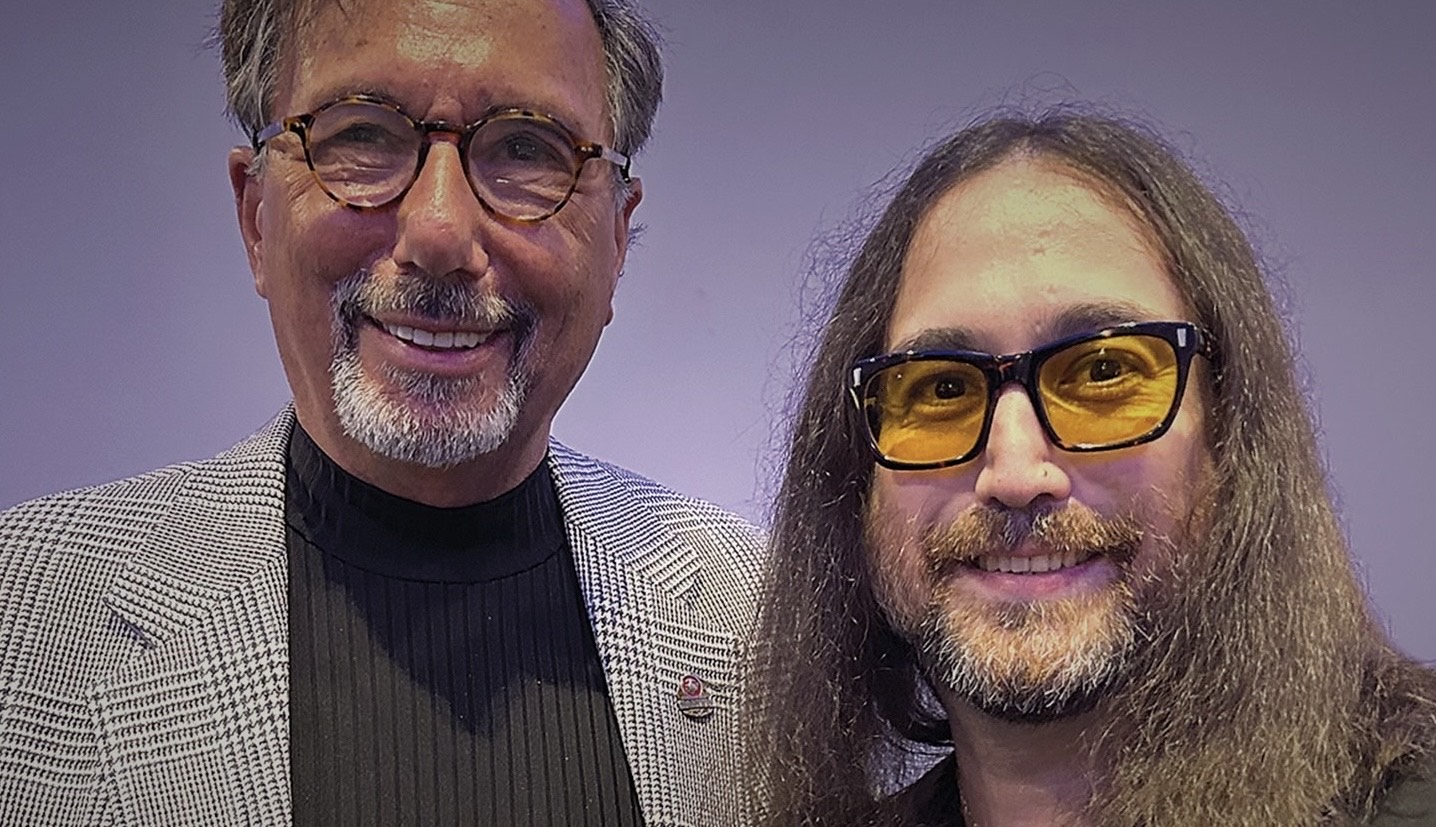
EDITOR’S NOTE: Now that our book Buzz Me In: Inside Record Plant Studios has been out for over six months, we have started sifting through the outtakes that, due to space limitations, simply had to be cut from the final draft.
Here’s one of them…
Dan Barbiero, a Yale graduate and Marine platoon commander in Vietnam, had one of the shortest but most illustrious careers of any assistant who ever worked for Roy Cicala in New York. With just eight-month’s prior-experience, Barbiero landed back-to-back, history-making album credits as a co-engineer on Stevie Wonder’s Innervisions and John Lennon’s Mind Games, two of the biggest Record Plant LA and NY albums (respectively) of the early-seventies.
Cousin of Cream- and Mountain-producer Felix Pappalardi, Barbiero was hired as a runner at Media Sound studios in New York where he helped Malcolm Cecil and Bob Margouleff get Stevie Wonder (and his new cyber-friend TONTO) onto tape. Wonder was impressed by the studio neophyte’s ear for a vocal that had been trained at the famed Saint Thomas Choir School. At Media Sound, Barbiero worked on the early takes of some of the artist’s biggest hits, including his masterpiece, “Living for the City,” and it was Barbiero, not expecting anything to stick, who suggested that they add a “sound play” to the end of the song.
“Living for the City” and other Innervisions songs were finished (without Barbiero) in Stevie and TONTO’s new home at Record Plant LA, Studio B throughout the spring of 1973. However, the final Innervisions tapes were prepared for manufacturing at the Record Plant New York mastering studio, The Cutting Room, which was right down the hall from the studio’s 10th floor office. There, Lennon was among the first to hear the landmark-R&B album and he was especially impressed by Wonder’s vocals.
Barbiero continued working at Media Sound after Wonder left the studio, until he received a call from Roy Cicala, asking if he wanted a job at the Record Plant. Barbiero accepted the offer without knowing that Lennon had asked Roy to hire him after seeing his name written in Magic Marker on a tape box. Even so, like many more-famous assistant engineers, he went through trial by fire alongside Cicala in Studio A.
Lennon and Barbiero spent a lot of time alone in Studio A that summer. The fact that the first Innervisions single, “Higher Ground,” was everywhere on the airwaves when it was released in July, while the album itself was constantly being played in the studios’ 10th floor mastering lab, helped gain the fledgling engineer studio-street cred with both his boss, and his prized client.
Barbiero remembers that Lennon was especially insecure about his vocals. He once sheepishly admitted to the kid, that when it came to singing: “I’m no Stevie Wonder.” With his choral training, Barbiero could pick the right vocal for the artist when it happened. And Cicala taught him the secret to fattening Lennon’s voice on tape.
Some nights, Barbiero just sat silently in the studio without running the machines, listening to Lennon rewriting his lyrics late into the night at his favorite, “Old Grand” upright piano. He recalls one session when he and John were alone working on a vocal when Lennon asked:
“Dan, how does that one sound?”
“Well John, it’s a little flat,” Barbiero replied with the honesty of a Marine.
Lennon tried a second time and this time Barbiero told him that he was still off-key.
“You must be a fucking choirboy!” was Lennon’s frustrated retort.
Barbiero punched the talk-back button on the console and matter-of-factly replied, “Exactly John, I am a choirboy,”
The comment cracked John up. They spent the rest of the night talking about choir school, and over the following weeks in studio isolation they often talked about Yale, Vietnam, and John’s immigration problems. Yoko’s new-found feminism was another topic of conversation. In September, Lennon shared that he was planning to head out to LA after the Mind Games sessions were through, though he didn’t say that he wasn’t going with Yoko.
Barbiero wondered why Lennon, who could work anytime he liked, usually chose the night shift to record. He once asked Lennon:
“What do you like about working at night, John?”
Lennon was prescient in his reply: “Dan, it’s not about working at night. There’s nobody on the streets when I leave. In plain daylight, somebody could just walk up, pull out a gun, and shoot me.”


